
Research & Evidence
Defensibility.ai began by studying what regulators, plaintiffs, and courts actually examined after serious failures — then converted recurring governance-judgment patterns into a decision and evidence methodology.
Major enforcement and litigation matters reviewed across multiple jurisdictions.
Reported monetary outcomes across the catalog — a scale indicator, not a causal formula or prediction.
Known risk, foreseeable harm, inadequate safeguards, available alternatives, missing accountability, and weak or missing decision rationale.
Every recurring failure pattern became a question or step the Defensible Governance Framework™ forces leadership to answer before the decision is questioned.
These examples illustrate why contemporaneous governance documentation matters. They are not claims that Defensibility.ai would have prevented or reduced any specific outcome.
Proposed fine substantially reduced
Use the case to examine how documented governance, oversight, and mitigation evidence can matter when regulators assess reasonableness after an incident.
Governance and documentation under scrutiny
Repeated enforcement illustrates how operational problems can become governance problems when leadership cannot clearly evidence risk ownership, remediation decisions, sequencing, and accountability.
Executive scrutiny became personal
The matter demonstrates why security representations, internal knowledge, escalation, and contemporaneous decision records can become central when regulators scrutinize executive judgment.
The evidence page separates what happened in the underlying matters from the inference Defensibility.ai draws from recurring patterns: leadership needs a contemporaneous record of the judgment behind consequential decisions.
Risk assessments, alternatives and cost-benefit analysis, executive approvals, board-level findings, decision rationale, and implementation evidence consolidated into a review-ready record.
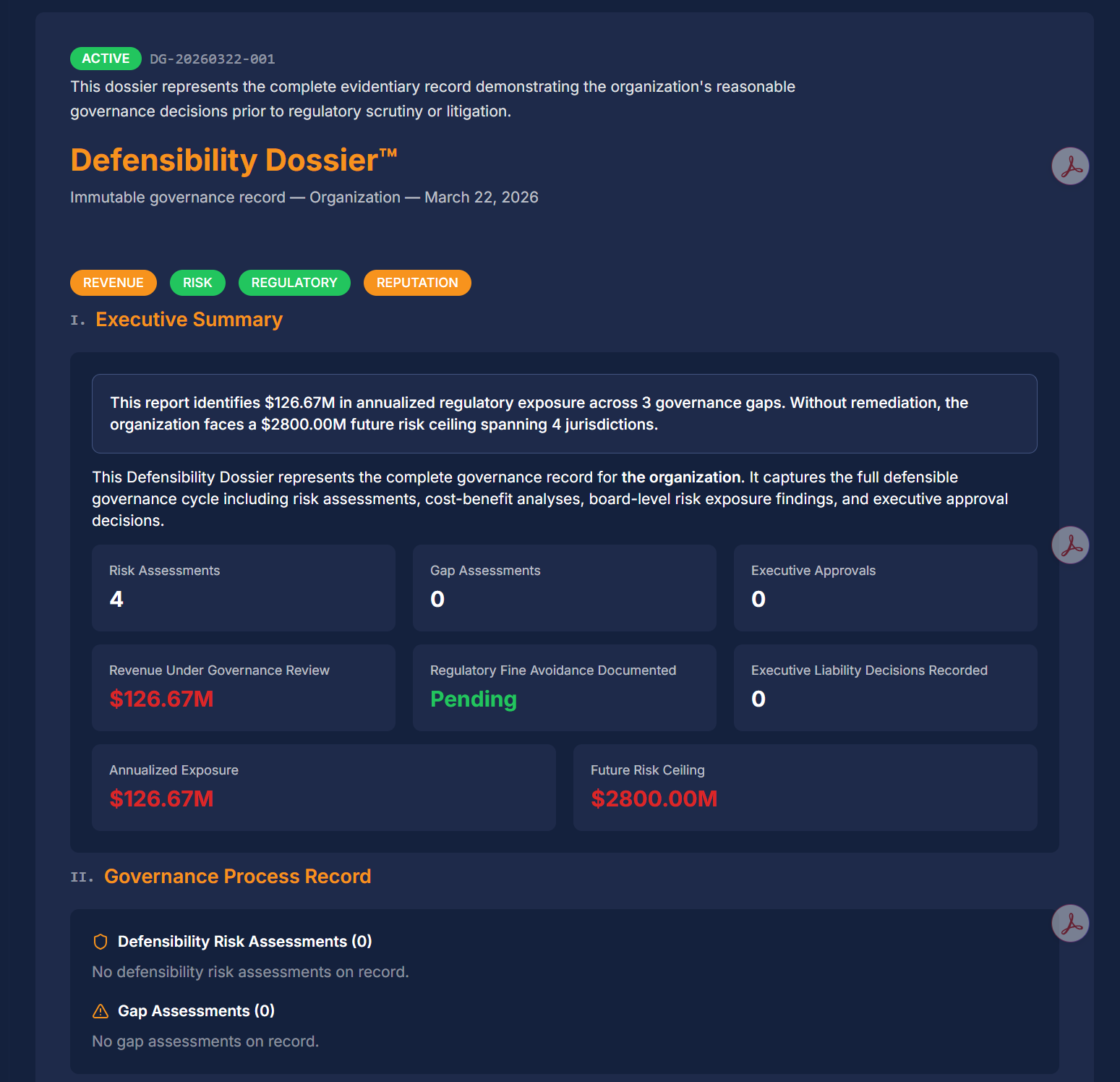
Defensibility Dossier™ — the decision and implementation record prepared for review.
“I've seen how executive decisions can come under intense scrutiny, even when they're made responsibly. Defensible Governance addresses a critical need: helping leaders show the reasonableness of their actions before they're judged in hindsight.”
“Prosecutors and regulators systematically reconstruct whether leadership met a reasonable duty of care. Defensible Governance™ is the framework that shifts the balance.”
How child-safety law is expanding beyond privacy into design accountability, foreseeable harm, and pre-release governance.
Read ArticleWhy personal accountability changes the evidentiary requirements facing CISOs and technology-risk leaders.
Read ArticleWhy decision thresholds and contemporaneous rationale need infrastructure rather than post-incident reconstruction.
Read ArticleThe shift from privacy compliance toward design accountability and documented decisions about foreseeable harm.
Read Article